


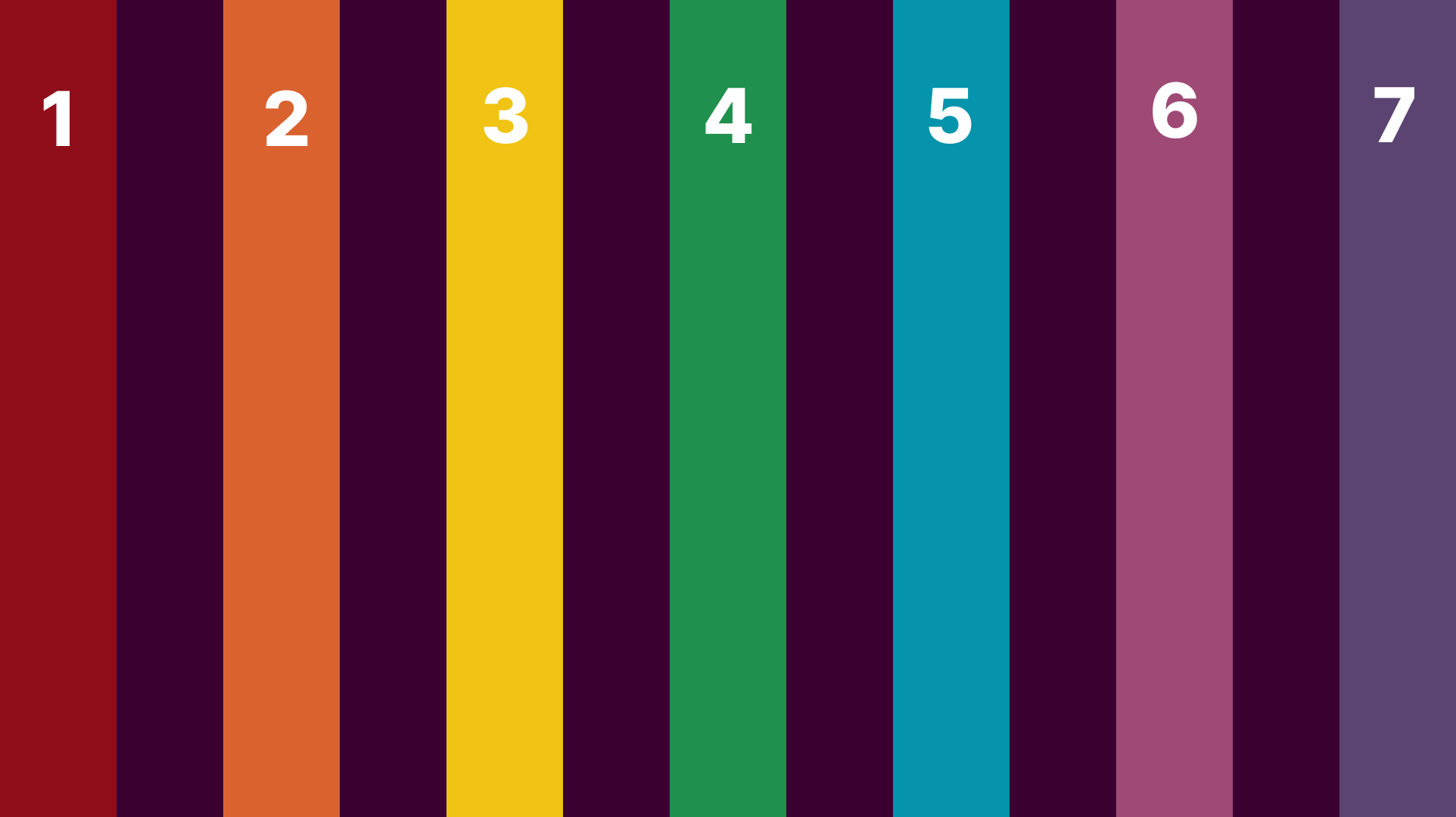
Why does Google feel finished the moment it loads? Why does Instagram feel impossible to put down? Why did the iPhone succeed when touchscreen phones had already existed and failed? The answer is not great design alone. It is not superior technology. It is layers, seven of them, stacked so carefully that the entire system disappears, and what remains is an experience that simply feels right. Most people who use great products never think about why they work. Most people who build products obsess over one or two layers and wonder why the result feels incomplete. Understanding all seven changes how you see every product you use and every product you might build.
.png)
Level 1: The Details That Tell Your Brain Everything Is Fine
When Google first launched, users assumed the page had not finished loading. Not because it was slow, it was fast. But because the screen looked too empty. The brain, expecting more, interpreted the absence as incompleteness. Google solved this with a single copyright line at the bottom of the page. It had no legal relevance to the user experience. It communicated nothing useful. But it signaled one critical thing: the page is done. Users started typing immediately. This is Level 1 design, the layer of micro-details that communicate trust, readiness, and clarity without the user consciously registering any of it. The best Level 1 decisions are invisible precisely because they work. They reduce cognitive friction, resolve unconscious uncertainty, and make a product feel natural to someone encountering it for the first time. When this layer is missing, products feel slightly off in ways that users cannot name but definitely feel.
Level 2: How Products Behave Like They Understand You
Level 2 is not about how a product looks. It is about how a product reacts. When you open a banking app while on a phone call and it immediately displays a warning, "this is not us calling you", the app has done something remarkable. It noticed you were on a call. It noticed you opened the app at the same moment. It connected the pattern and surfaced the right message before you even thought to ask. No button press. No navigation. Just context-aware behavior that feels almost human. Google Maps did the same thing differently. Pinch-to-zoom requires two hands — awkward when you are walking, carrying something, or riding. So Google quietly added a single-finger zoom: double tap, hold, and drag. No tutorial. No tooltip. Just a gesture that users discover and immediately understand. Pull-to-refresh is perhaps the most famous example an invisible interaction with no button and no instruction that now powers infinite scroll feeds generating billions in revenue. Nobody was taught it. It just felt right, and it spread everywhere. Level 2 design makes a product feel alive rather than mechanical. On mobile especially, where users are distracted, moving, and often using one hand, this layer separates products people trust from products people merely tolerate.
.png)
.png)
Level 3: When the Technology Completely Disappears
In 2008, music streaming had a fundamental problem. Internet speeds were inconsistent, and songs took thirty to sixty seconds to buffer. Spotify had promised instant playback but standard streaming infrastructure could not deliver it. Their solution came from an unexpected place. They used peer-to-peer technology the same architecture behind file sharing and piracy to pull audio simultaneously from Spotify's servers, your device's cache, and nearby users who had recently played the same track. The result was playback that started in under a second. As a listener, you experienced none of this. You clicked play and the song played. The entire infrastructure distributed servers, intelligent caching, real-time network routing was completely invisible. That invisibility was the achievement.
This is Level 3: the layer where engineering excellence earns its value not by being noticed but by eliminating every moment where it could have been. Users do not think about latency, data centers, or network architecture. They only notice these things when they fail. The entire purpose of Level 3 is to make sure they never do.
.png)
Level 4: The Defaults That Quietly Run Your Life
You finish a Netflix episode. The next one starts in five seconds. You did not ask for it. You did not choose it. It was simply the default and most users never change defaults. This is why Google has paid billions of dollars to be the default search engine on Android, Chrome, and Safari. Not because users actively prefer Google over alternatives in every case, but because defaults eliminate the moment of choice. When something is already set, inertia takes over. The decision effectively gets made for you. Autoplay, notification settings, privacy preferences, suggested connections these are all Level 4 decisions. They are rarely examined by the users they affect, but they shape behavior at enormous scale. A single default setting, applied across hundreds of millions of users, becomes one of the most powerful behavioral design choices a product team ever makes. Level 4 does not ask users what they want. It decides and then makes switching inconvenient enough that most people never bother.
.png)
Level 5: Designing the Structure, Not the Screen
Most design conversations happen at the surface layout, color, typography, button placement. Level 5 is deeper. It is the structural decision that determines how the entire product works, and therefore how every future feature will fit inside it. Notion made everything a page. Not some things everything. Text, databases, tasks, wikis, and calendars are all pages containing other pages. This single structural rule means that any new feature Notion adds inherits the same logic without requiring new mental models from users. Slack made everything a channel. One structure that scales from two people to an entire enterprise without the underlying model ever needing to change. These are not UI decisions. They are architectural ones and they have compounding returns. A strong Level 5 structure makes the product easier to use, easier to scale, easier to extend, and easier for users to understand as it grows. Products that skip this layer accumulate complexity over time until using them feels like navigating a system that grew without a plan because it did.
.png)
Level 6: Changing What People Think the Product Is For
Video messaging existed before Loom. But Loom asked a different question: what if video replaced the meeting entirely? Same technology. Completely reframed purpose. A company valued at nearly one billion dollars. Email existed before Superhuman. But Superhuman reframed it as the fastest email experience possible, a product where speed itself was the value proposition. Nothing fundamental about email changed. The frame did. And people paid a premium for it. Level 6 works when the technology stays largely the same, the interface changes only modestly, but the user's understanding of what the product is for shifts completely. This is the layer where positioning and product design become the same thing. The market does not change because you built something new, it changes because you helped people see an existing problem in a way they never had before.
.png)
Level 7: The Vision That Makes Every Other Layer Worth Building
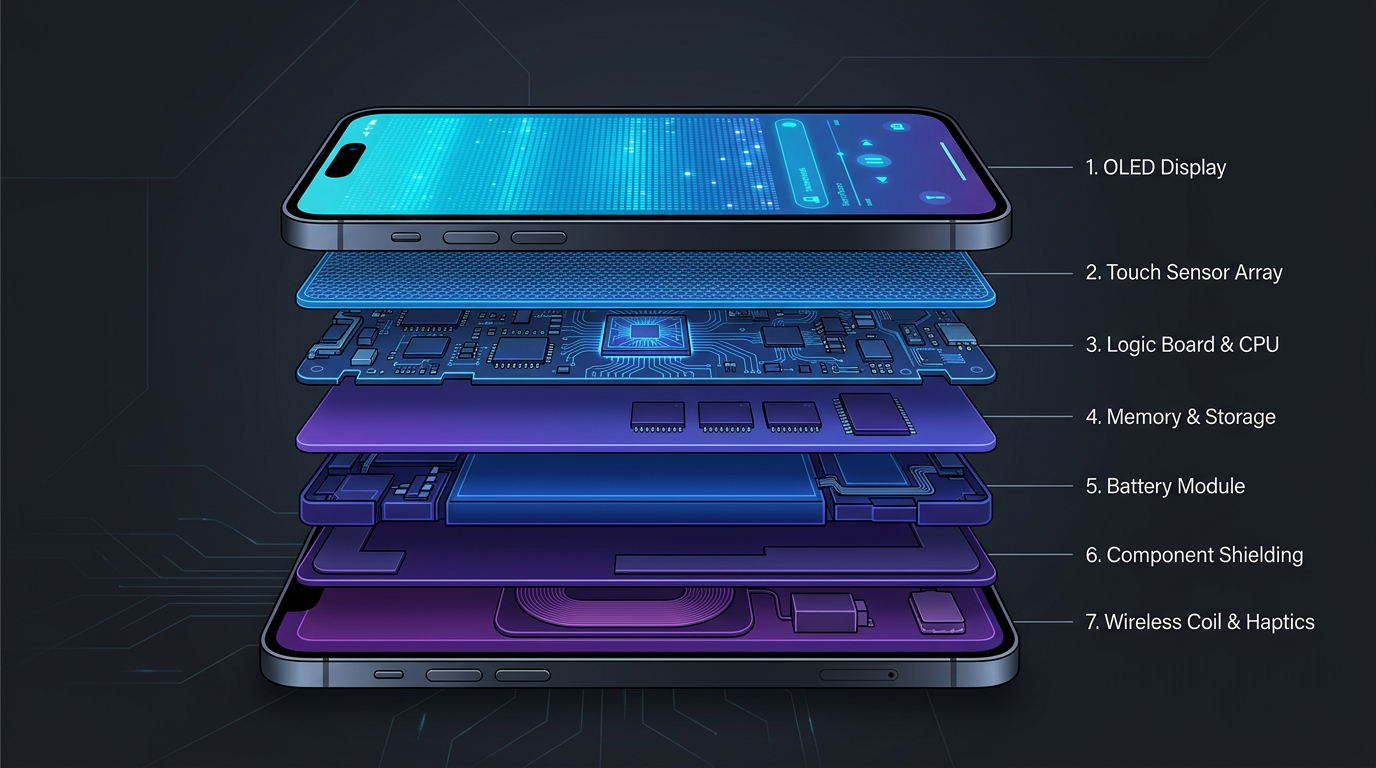
When Apple announced the original iPhone with the words "remove all buttons make it just a screen," the idea was not new. Touchscreen phones had existed. They had failed. The concept alone was not enough. What Apple did differently was execute every layer beneath the vision with equal commitment. A clear structural model where everything is an app. Smart, considered defaults. Natural gestures pinch, swipe, tap that felt immediately intuitive. Breakthrough hardware in multi-touch sensing and durable glass. And dozens of tiny Level 1 details, including the keyboard correction algorithm, that made typing on glass actually work. Others had the vision. Apple had the execution across all seven levels simultaneously. Level 7 is the bold belief about what a product could be and what change it could make in the world. But vision without the layers beneath it is just a concept. The products that actually change behavior that become indispensable, that generate categories that did not previously exist are the ones where every level reinforces every other one.
.png)
Why the Layers Matter More Than Any Single Decision
Great products are not built by obsessing over one layer brilliantly while neglecting the others. They are built by understanding that each layer creates the conditions for the next one to work. Micro-details build trust. Trust makes interactions feel natural. Natural interactions make invisible infrastructure feel like magic. Magic makes defaults feel obvious. Obvious defaults make structure feel intuitive. Intuitive structure makes reframing possible. And reframing is what gives a bold vision the foundation it needs to actually land. When all seven layers align, technology disappears entirely. What remains is a product that people trust without knowing why, return to without being asked, and recommend without needing a reason. That is not luck. That is layers.




.png)