



Why Most Marketing Fails: The Real Truth About Attribution & Customer Decisions
Modern marketing looks precise. Dashboards display conversions in real time. Campaigns report ROI down to the decimal. Every click, view, and action appears accounted for. It creates a deeply convincing illusion that businesses know exactly what is working and why. But most businesses don't. They are making major strategic decisions based on incomplete data, oversimplified assumptions, and a fundamental misunderstanding of how their customers actually behave. The result is a quiet, compounding problem: money flows toward what is easy to measure rather than what actually drives growth. This problem has a name. It is called attribution and it is one of the most misunderstood and mishandled concepts in marketing today.
What Attribution Actually Means
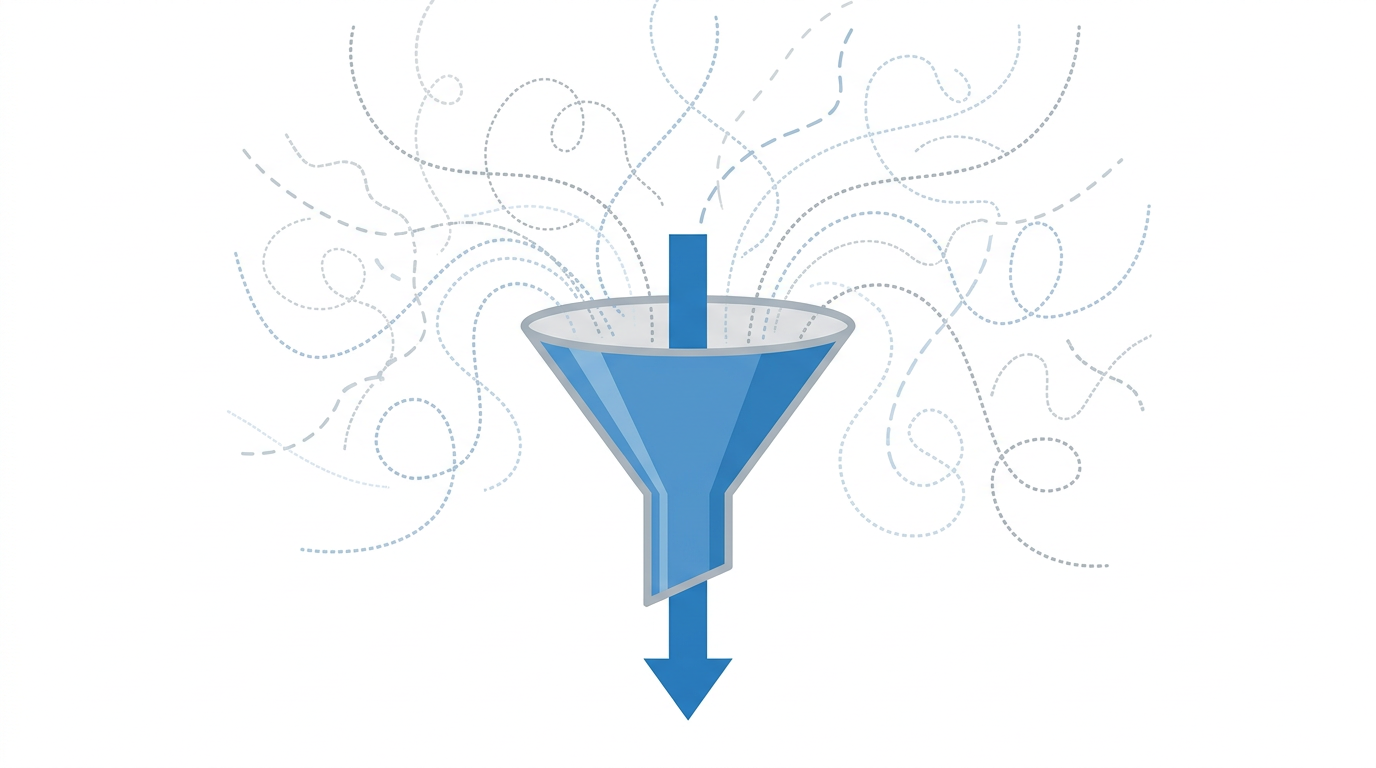
Attribution is the attempt to answer one deceptively simple question: what actually caused this result? When a customer makes a purchase, what influenced that decision? Was it an ad they saw last Tuesday? A YouTube video from three weeks ago? A recommendation from a colleague? The answer is almost never singular, and almost never the one your dashboard is pointing to. Human decision-making does not happen in a straight line. A person might discover a brand through a social media post, revisit it after seeing a video, compare options during a late-night search a week later, and finally convert after a friend mentions it in passing. Assigning credit for that sale to any single touchpoint is not just inaccurate it actively misleads every decision that follows.
The Mistake Most Businesses Are Making Right Now
The most common attribution error in marketing is placing all the credit on the last action before a sale. This is why metrics like clicks and conversions dominate most marketing reviews they are the final, visible step in a much longer journey, and therefore the easiest to point to. But optimizing for the last step means ignoring everything that made that last step possible. Over time, businesses that think this way start cutting brand awareness spend because it does not show immediate returns. They double down on performance campaigns that look efficient on paper. And gradually, without realizing it, they hollow out the very foundation that was generating demand in the first place. Growth begins to depend entirely on continuous ad spend. The moment the budget pauses, results disappear. This is not a scaling business it is a rented audience with no equity.
Why Measurable Marketing Is Not the Same as Effective Marketing
There is a seductive logic to metrics like return on ad spend and cost per acquisition. They feel scientific. They make marketing appear controllable and predictable. But these numbers only capture what is easy to track they say nothing about the trust, familiarity, and emotional resonance that actually determine whether a customer chooses you over a competitor. This creates a slow, dangerous pattern. Campaigns that are easy to attribute get more budget. Efforts that build genuine brand value content, community, storytelling, reputation get cut because their impact does not appear cleanly in a 30-day window. As competition increases, ad costs rise, margins compress, and the business becomes less sustainable with every passing quarter. In trying to optimize everything, companies often erode the one thing that made customers choose them to begin with.
How Customers Actually Make Decisions
To understand attribution properly, you have to first understand how purchase decisions actually happen. Customers especially for meaningful products or services do not make instant decisions. They move through a process that involves discovery, passive awareness, active research, comparison, and reflection. Often, they are not even consciously aware they are doing it. And at the final moment, when all the rational information has been gathered, emotion tends to decide. How familiar does this brand feel? How much do I trust them? Have I seen them enough times to believe they are credible? These factors are shaped over weeks and months of indirect contact none of which shows up cleanly in a conversion dashboard. Marketing is not primarily about triggering immediate action. It is about shaping perception over time, so that when the moment of decision arrives, the answer already feels obvious.
Why Traditional Tracking Methods Cannot Tell You the Full Story
Coupon codes, UTM parameters, survey forms, last-click attribution models these tools are useful, but they are not accurate. They capture a fragment of reality and present it as the whole picture. Users do not remember where they first encountered a brand. They click inconsistently, skip steps, interact across multiple devices, and convert through paths that defy any clean model. In a fast-moving, distracted digital environment, expecting precise end-to-end tracking is an unrealistic standard that leads to consistently misleading conclusions. Businesses that trust these models completely are not being data-driven — they are being data-deceived.
The Shift From Perfect Attribution to Smart Understanding
Since perfect attribution is not achievable, the goal should not be to track everything precisely. The goal should be to understand patterns and signals that indicate genuine impact even when they cannot be tied to a single campaign. This is where proxy metrics become valuable. Rather than measuring only clicks and views, look for signals of real engagement: content being saved, shared, discussed, or revisited. These behaviors reflect a quality of attention that surface-level metrics completely miss. A piece of content with modest view counts but high share rates is often doing more strategic work than a high-reach campaign that nobody remembers. At the same time, data needs to be complemented by direct human insight. Talking to customers — actually asking them how they found you, what made them trust you, what nearly made them leave surfaces the kind of understanding that no analytics platform can replicate. The best marketing decisions are made when quantitative signals and qualitative understanding are used together.

The Time Horizon Problem: Short-Term Results vs Long-Term Value
Performance marketing captures existing demand. Brand marketing creates new demand. Both are necessary, and treating them as competitors is one of the most expensive mistakes a business can make. Short-term campaigns generate immediate revenue and keep the business operational. But without simultaneous investment in brand awareness, trust, and preference, the business is constantly paying to acquire customers it could have attracted organically. The most durable, efficiently growing businesses are those that run both in parallel using performance channels to capture what the brand has already built, and using brand channels to expand what performance can eventually convert. Businesses that only play the short-term game are always one budget cut away from irrelevance.
Attribution Beyond Marketing
The problem of attribution is not limited to business strategy. It shows up in how people evaluate their own careers, their habits, and their progress. Success is rarely caused by a single skill, decision, or effort. It is the accumulated result of timing, environment, relationships, consistency, and execution most of which cannot be neatly traced back to one cause. Misattributing success or failure leads to reinforcing the wrong behaviors and abandoning the ones that were actually working. In life, as in marketing, understanding what truly drives outcomes requires patience, humility, and a willingness to look beyond the obvious.
Stop Chasing Numbers. Start Understanding Impact.
Attribution is not about finding a perfect answer it is about asking a more honest question. Not "which campaign generated this sale?" but "what combination of efforts, over what period of time, shaped this customer's decision?" When businesses make that shift, they stop optimizing for vanity and start building for reality. They invest in the full journey, not just the final step. They measure what matters, not just what is convenient to measure. Success in marketing does not come from tracking everything. It comes from understanding what truly drives results and having the discipline to keep investing in it even when the dashboard cannot immediately prove its value.




.png)